

New Delhi:
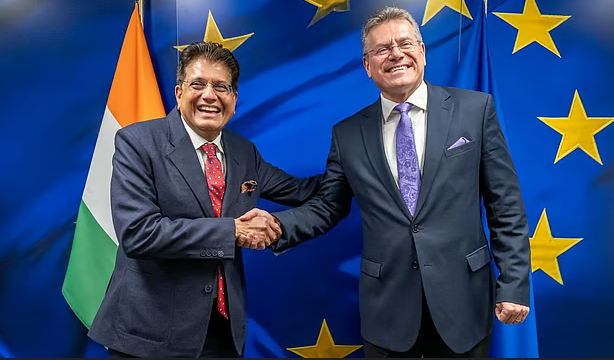
The long-awaited India–European Union Free Trade Agreement (EU–India FTA) is expected to be implemented as early as 2026, with significant benefits likely for India’s labour-intensive sectors, Union Commerce and Industry Minister Piyush Goyal has indicated.
Speaking at a recent industry interaction, Goyal highlighted that negotiations between India and the European Union are progressing at a steady pace, reflecting a shared commitment to strengthen bilateral trade and investment ties. The proposed agreement aims to create a balanced, ambitious, and mutually beneficial framework that supports economic growth on both sides.
According to the minister, sectors such as textiles, garments, footwear, leather goods, gems and jewellery, marine products, and light engineering are expected to be among the biggest beneficiaries once the agreement comes into force. These industries are labour-intensive and have strong export potential to European markets, which could lead to increased employment opportunities across India.
The EU is one of India’s largest trading partners, and a comprehensive free trade agreement is expected to reduce tariffs, improve market access, and simplify regulatory procedures. Industry experts believe that improved access to the EU market could enhance the global competitiveness of Indian manufacturers, particularly small and medium enterprises (SMEs).
Goyal also emphasized that India is negotiating the FTA while safeguarding the interests of domestic industries, farmers, and workers. He reiterated that India’s approach to trade agreements focuses on long-term national interest rather than short-term gains.
“The goal is not just higher trade volumes, but sustainable growth, value addition, and job creation,” the minister said, underlining the government’s focus on inclusive development.
If implemented in 2026 as anticipated, the EU–India FTA could mark a major milestone in India’s trade diplomacy. Analysts note that the agreement may also help India diversify its export destinations at a time of global economic uncertainty and shifting supply chains.
While formal timelines will depend on the conclusion of negotiations and legal processes, optimism remains high that the agreement will unlock new opportunities for Indian exporters and strengthen economic cooperation between India and the European Union in the years ahead.