


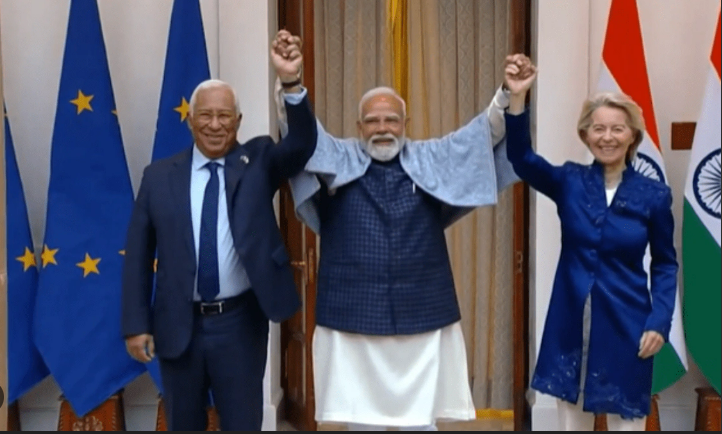
India and the European Union (EU) have taken a significant step toward deepening their economic ties by agreeing to grant each other ‘Most Favoured Nation’ (MFN) status. The move is being viewed as a positive development in bilateral trade relations, aimed at ensuring fairness, transparency, and equal treatment in commercial dealings.
What Does MFN Status Mean?
Despite the name, “Most Favoured Nation” does not imply special or exclusive benefits. Instead, it ensures non-discriminatory trade. Under MFN principles, if one country offers favorable tariff rates or trade concessions to any other nation, the same benefits must be extended to the country holding MFN status. In simple terms, both India and the EU will treat each other on par with their most preferred trading partners.
This approach promotes stability and predictability in trade policies, which are crucial for businesses and investors planning long-term commitments.
Benefits for India
The European Union is one of India’s largest trading partners, representing a vast and affluent market. With MFN status in place, Indian exporters may gain improved access to European markets under more transparent and consistent trade conditions. Sectors such as pharmaceuticals, textiles, engineering goods, IT services, chemicals, and agricultural products are expected to benefit the most.
Reduced trade barriers and clearer regulatory frameworks could make Indian goods more competitive in Europe. This, in turn, may boost exports, increase foreign exchange earnings, and create employment opportunities within India. Small and medium-sized enterprises (SMEs), in particular, could see expanded opportunities in international trade.
Advantages for the European Union
For the EU, India represents one of the world’s fastest-growing major economies and a rapidly expanding consumer base. MFN status offers European businesses greater confidence in operating within the Indian market. Sectors such as renewable energy, digital technology, infrastructure, electric mobility, and advanced manufacturing may witness stronger collaboration.
European firms could benefit from India’s manufacturing capabilities and skilled workforce, while also contributing advanced technology and innovation. The arrangement may also encourage joint ventures and strategic investments.
A Step Toward Broader Agreements
Trade analysts believe that granting MFN status could pave the way for a comprehensive Free Trade Agreement (FTA) between India and the EU. Negotiations on broader economic cooperation have been ongoing, and this development signals mutual intent to strengthen long-term engagement.
In conclusion, the decision to grant ‘Most Favoured Nation’ status marks an important milestone in India–EU relations. By promoting equal treatment and reducing trade uncertainties, the move is expected to enhance bilateral trade, attract investment, and foster sustainable economic growth for both partners in the years ahead.