

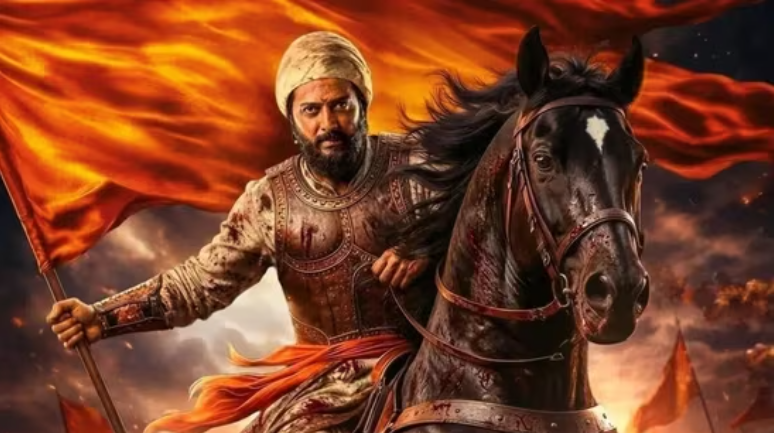
The massive success of Raja Shivaji has created a new wave of excitement in the Marathi film industry. The historical drama, directed by and starring Riteish Deshmukh, recently crossed the ₹100 crore mark at the box office, becoming only the second Marathi film in history to achieve the milestone after Sairat.
Industry experts believe the film’s performance represents more than just commercial success. Many see it as a sign that Marathi cinema is entering a new phase where regional films can compete with larger mainstream productions through strong storytelling, emotional connection and technical quality.
Based on the life and legacy of Chhatrapati Shivaji Maharaj, the film presents the story of the legendary Maratha ruler through large-scale action sequences, emotional drama and visually rich historical settings. Audiences have responded positively to the film’s presentation, with many praising its attempt to bring an important chapter of Indian history to the big screen in a grand cinematic style.
The movie opened strongly during its first weekend and maintained momentum throughout the following weeks. Trade analysts say one of the most remarkable aspects of the film’s performance is that it achieved the ₹100 crore milestone largely through domestic collections, without a major overseas release. This is considered a rare achievement for a Marathi-language film.
For nearly a decade, Sairat remained unmatched as the highest-grossing Marathi film. Its success in 2016 changed perceptions about the commercial potential of Marathi cinema. However, no other Marathi film managed to approach that benchmark until the release of Raja Shivaji. With its current pace at the box office, analysts believe the film could soon surpass Sairat’s lifetime earnings as well.
The success of the film has also strengthened Riteish Deshmukh’s position in Marathi cinema. Earlier, his film Ved had also emerged as one of the highest-grossing Marathi films. Industry observers say Riteish has played an important role in attracting wider audiences to Marathi-language films by combining strong production value with emotionally engaging stories.
Apart from Riteish, the film features several prominent actors including Genelia D’Souza, Sanjay Dutt, Abhishek Bachchan, Mahesh Manjrekar and Sachin Khedekar. The ensemble cast and large-scale production have contributed significantly to the film’s appeal.
Film experts believe the growing success of regional cinema reflects changing audience preferences across India. Viewers are increasingly willing to support films with strong narratives, regardless of language. The rise of streaming platforms and wider access to regional content have also helped Marathi films reach new audiences.
The success of Raja Shivaji is now expected to encourage more investment in Marathi cinema, particularly in historical dramas and large-scale productions. Producers and filmmakers may become more confident about experimenting with ambitious subjects and higher production budgets.