

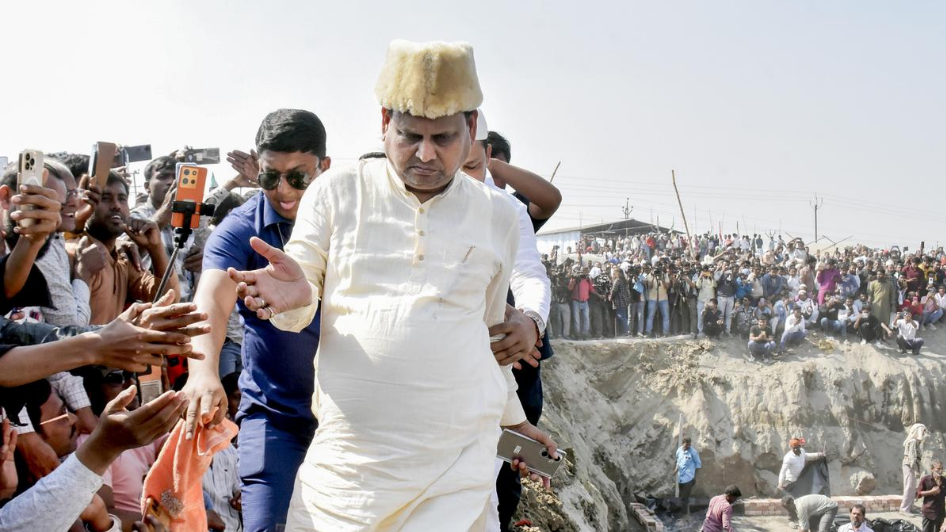
A fresh political debate has erupted in West Bengal following a controversial statement by Humayun Kabir, who suggested that the state could, in the future, see a Muslim Chief Minister or Deputy Chief Minister. His remarks, linked to sentiments surrounding the Babri Masjid demolition, have triggered widespread reactions across the political spectrum.
Speaking at a public gathering, Kabir emphasized that issues like Babri Masjid are not merely historical events but continue to influence the emotions and political thinking of a large section of society. He stated that demographic realities and evolving political awareness could eventually shape leadership representation in the state.
The statement has drawn sharp criticism from opposition parties, who accused him of promoting identity-based politics for electoral gains. Critics argue that such remarks risk deepening social divisions and divert attention from pressing governance issues such as employment, infrastructure, and economic development.
On the other hand, some political observers see the statement as part of a broader discussion on representation in Indian democracy. They point out that West Bengal has a significant minority population, and conversations around inclusive leadership are not new to the state’s political landscape.
Experts note that references to historical events like the Babri Masjid demolition often carry deep emotional weight and can quickly influence public discourse. This makes it essential for political leaders to communicate carefully, especially in a diverse and sensitive social environment.
The debate has also sparked reactions from civil society groups, many of whom have urged political leaders to avoid rhetoric that could polarize communities. They stress the importance of focusing on development-oriented politics rather than identity-driven narratives.
At the same time, some analysts argue that discussions about representation should not be dismissed outright, as they reflect aspirations within different communities. However, they caution that such discussions must remain within the framework of constitutional values and social harmony.
As the controversy continues, it remains to be seen how major political parties in West Bengal respond and whether this issue will play a role in shaping future electoral strategies. For now, Kabir’s remarks have undoubtedly added a new dimension to the state’s evolving political discourse.