


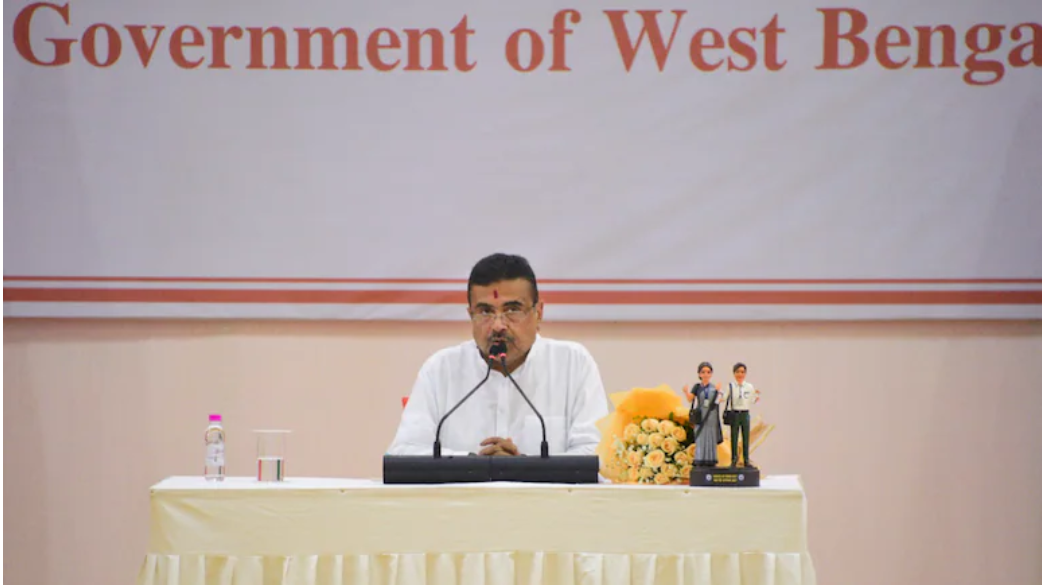
The expansion of West Bengal’s newly formed government is being viewed as a crucial step in strengthening the state’s administrative framework and accelerating policy implementation. With a larger council of ministers expected to take charge of key departments, political observers believe the government is entering a new phase where governance and development outcomes will be closely scrutinized by the public.
The new administration came to power following a landmark electoral victory that reshaped the political landscape of the state. In the initial weeks after assuming office, the government functioned with a limited group of ministers handling major responsibilities. However, as the administration prepares to expand its cabinet, expectations are growing that decision-making processes will become more streamlined and efficient across departments.
Experts note that a full-fledged cabinet plays a vital role in ensuring effective governance. Different ministers are responsible for overseeing policy execution, monitoring public welfare schemes, and coordinating with administrative officials. With more leaders taking charge of various portfolios, the government is expected to strengthen its ability to address challenges across sectors such as education, healthcare, infrastructure, agriculture, and industry.
One of the key priorities before the government is boosting economic growth and employment opportunities. West Bengal has significant potential in manufacturing, logistics, information technology, and agriculture-based industries. Analysts believe that a stronger cabinet structure could help attract investments, improve ease of doing business, and create conditions for long-term economic expansion.
Infrastructure development is another area likely to receive increased attention. The state has ambitious goals related to road connectivity, urban modernization, transportation networks, and rural development. Administrative experts argue that assigning dedicated ministers to these sectors can help improve coordination between departments and speed up project execution.
Political observers also see the cabinet expansion as an opportunity for the government to ensure broader representation. In a diverse state like West Bengal, regional and social balance often plays an important role in governance. By including leaders from different geographical areas and communities, the administration can strengthen its outreach and demonstrate an inclusive approach to policymaking.
The public, meanwhile, is looking beyond political symbolism and focusing on results. Voters who supported the change in government are expecting visible improvements in public services, employment generation, law and order, and economic opportunities. Analysts suggest that the coming months will be critical in shaping public perception of the new administration.
Administrative officials believe that the allocation of portfolios will bring greater clarity to departmental responsibilities. This could help speed up approvals, improve accountability, and ensure that government programs are implemented more effectively. Several ongoing projects are also expected to gain momentum once the expanded cabinet begins functioning.
Opposition parties have indicated that they will closely monitor the performance of the new ministers and assess whether the government can deliver on its promises. They argue that public expectations are high and that policy announcements must be matched by tangible outcomes on the ground.
For the ruling establishment, the cabinet expansion represents more than a routine political exercise. It is an opportunity to translate electoral success into administrative effectiveness and demonstrate its vision for the future of West Bengal. The composition of the cabinet and the priorities assigned to various departments are expected to offer important clues about the government’s long-term agenda.