

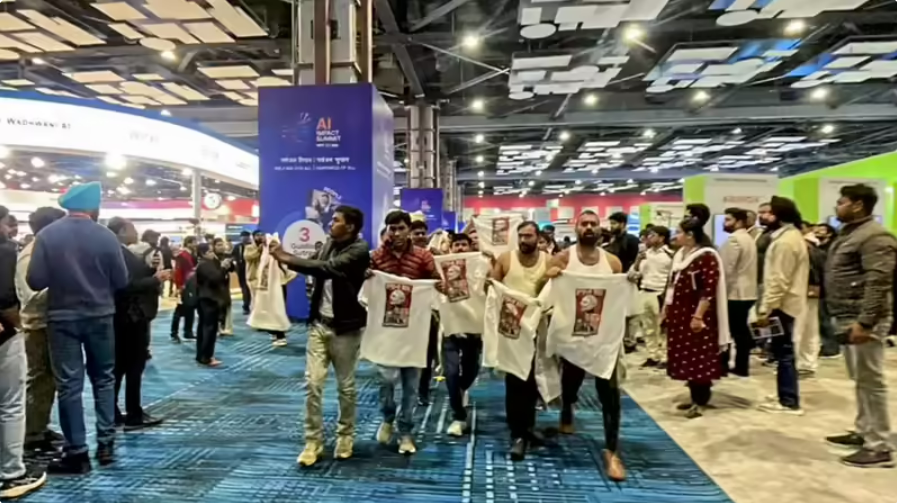
New Delhi: A recent protest by the Congress party inside the Parliament complex has sparked a fresh political debate, with attention focusing on the style and messaging of the demonstration. The controversy erupted after some party workers adopted a shirtless form of protest to highlight issues such as inflation and unemployment.
The protest, aimed at drawing attention to rising prices and alleged governance failures, quickly became a talking point across political circles. While Congress leaders described the act as a symbolic expression of the economic distress faced by common citizens, critics argued that such dramatic gestures risk overshadowing substantive policy discussions.
The ruling Bharatiya Janata Party (BJP) criticized the move, calling it an attempt to gain publicity rather than engage in meaningful debate. BJP spokespersons said that Parliament should remain a space for structured discussion and accountability, not theatrics.
Within the broader INDIA opposition alliance, there has been no official dissent. However, political observers suggest that some allies may prefer more conventional methods of protest to maintain a unified and disciplined image ahead of key electoral battles. Maintaining cohesion within a multi-party alliance often requires careful coordination of both messaging and methods.
Supporters of Rahul Gandhi maintain that symbolic protests have historically been part of democratic politics and are meant to amplify public concerns. They argue that unconventional methods can sometimes draw attention to pressing socio-economic issues that might otherwise receive limited coverage.
Analysts note that while protest optics may dominate short-term headlines, long-term political outcomes will likely depend on policy clarity, alliance management, and voter perception. Whether this episode strengthens or strains opposition unity remains to be seen, but it has undeniably reignited discussion about strategy and leadership within the INDIA bloc.