

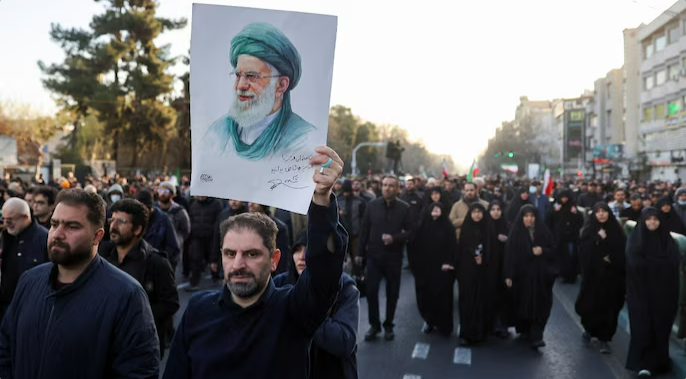
Tehran: Iran has entered a critical political transition following the reported death of its Supreme Leader, Ayatollah Ali Khamenei. The development comes at a time of heightened tensions in the Middle East, particularly involving United States and Israel, further intensifying global attention on the region.
According to Iran’s constitutional framework, when the position of Supreme Leader becomes vacant, an interim leadership structure takes charge until a permanent successor is selected. In the current situation, Iran’s President Masoud Pezeshkian, along with the head of the judiciary and a senior clerical representative, will collectively oversee the transition process.
The responsibility of appointing the next Supreme Leader lies with the Assembly of Experts, an 88-member body empowered to select and supervise the country’s highest authority. Political observers believe the selection process will be closely watched both domestically and internationally, as the new leader’s stance could significantly shape Iran’s future direction.
The leadership transition comes amid reports of military tensions between Iran and its regional adversaries. While official statements emphasize national unity and stability, security measures have reportedly been tightened across major cities. Government officials have urged citizens to remain calm during this sensitive period.
Experts suggest that the upcoming leadership choice could influence Iran’s domestic reforms, economic strategies, and foreign policy priorities. Key issues likely to remain at the forefront include regional security, diplomatic engagement, and economic resilience under ongoing international pressures.
Global markets and governments are monitoring developments closely, given Iran’s strategic importance in energy supply routes and regional geopolitics. As the transition unfolds, much will depend on how smoothly constitutional procedures are implemented and how regional dynamics evolve in the coming weeks.
The coming days are expected to be decisive for Iran’s political future and broader Middle Eastern stability.