

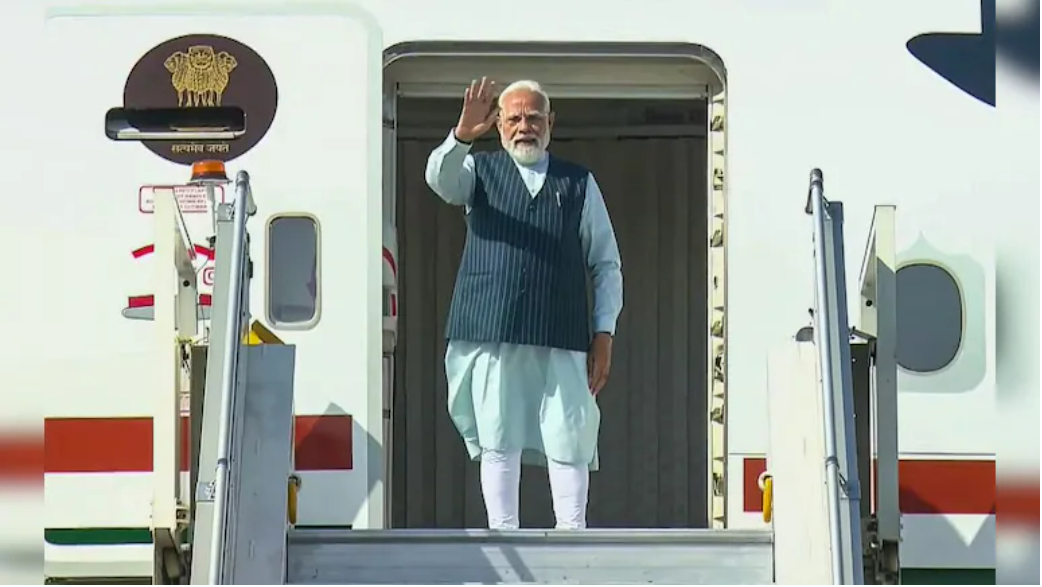
Narendra Modi’s ongoing visit to Europe is being viewed as a major diplomatic and economic outreach aimed at strengthening India’s long-term strategic partnerships with key European nations. The visit, which includes engagements in Netherlands and Sweden, comes at a time when global economic alliances are rapidly evolving and countries are looking to diversify trade and technology partnerships.
According to officials, the tour focuses on expanding cooperation in areas such as trade, defence, semiconductors, renewable energy, innovation, artificial intelligence and climate action. Analysts believe the visit reflects India’s growing importance in global supply chains and its emergence as a trusted strategic partner for European countries.
Prime Minister Modi’s meetings in the Netherlands are expected to focus heavily on investment and high-technology cooperation. India and the Netherlands have significantly expanded bilateral relations over the past few years, moving beyond traditional sectors such as agriculture, water management and healthcare into advanced technology and strategic industries.
One of the most closely watched developments during the visit is the expected collaboration between Tata Electronics and ASML for the semiconductor manufacturing project in Dholera, Gujarat. Industry experts say such cooperation could strengthen India’s ambition to become a global semiconductor manufacturing hub.
The semiconductor sector has become strategically important worldwide following supply chain disruptions and increasing geopolitical tensions in recent years. Many countries are now seeking alternatives to concentrated manufacturing hubs, and India is positioning itself as a reliable destination for advanced manufacturing and technology investment.
Apart from economic cooperation, defence and maritime security are also expected to feature prominently in discussions. European countries are increasingly viewing India as an important Indo-Pacific partner, especially in maintaining secure trade routes and regional stability.
The Indian diaspora continues to play an important role in strengthening ties between India and European nations. In the Netherlands alone, thousands of people of Indian origin contribute actively to business, education and cultural exchanges. Prime Minister Modi is also expected to interact with members of the Indian community during the visit.
After the Netherlands, PM Modi will travel to Sweden for the India-Nordic Summit. India and Sweden have deepened ties significantly in recent years, particularly in innovation, green technology and sustainable industrial development. Both countries are collaborating in areas such as clean energy, artificial intelligence, electric mobility and climate action.
Swedish defence company Saab establishing a manufacturing facility in India is seen as an important milestone in bilateral defence cooperation. Experts say this aligns with India’s “Make in India” initiative and the country’s efforts to strengthen domestic defence production capabilities.
Political observers believe PM Modi’s Europe visit is also strategically significant because many European countries are seeking stronger partnerships outside traditional geopolitical frameworks. India’s large market, growing economy and technological capabilities make it an attractive partner for long-term collaboration.
Experts say the visit could pave the way for greater investment flows, stronger trade agreements and expanded cooperation in critical technologies. As global economic and political dynamics continue to shift, India’s engagement with Europe is expected to become increasingly important in shaping future international partnerships.