

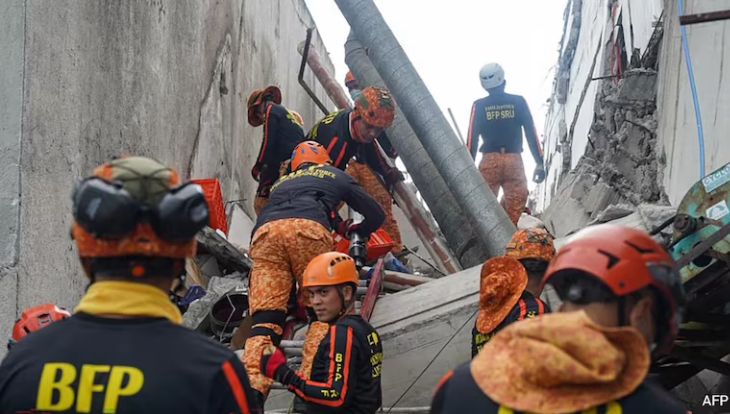
Recovery efforts are gaining momentum across the southern Philippines after a powerful earthquake caused widespread destruction, leaving dozens dead, hundreds injured, and thousands displaced. While emergency rescue operations have largely transitioned into relief and rehabilitation work, authorities now face the enormous challenge of helping affected communities rebuild their lives and restore essential services.
The strong earthquake, which struck near the island of Mindanao, damaged homes, roads, hospitals, schools, and public infrastructure across several provinces. Many families were forced to evacuate their homes immediately after the disaster, seeking shelter in temporary camps and open spaces due to concerns about structural damage and continuing aftershocks.
Government agencies, emergency responders, and humanitarian organizations have been working around the clock to provide food, clean drinking water, medical supplies, and temporary shelter to affected residents. Relief centers have been established in multiple locations, offering support to families who lost homes or were unable to return because of safety concerns.
One of the most pressing challenges facing authorities is restoring transportation links to isolated communities. Damaged roads, landslides, and the collapse of key infrastructure have made it difficult to deliver supplies to some remote areas. In several locations, helicopters and specialized rescue vehicles are being used to transport aid and assess damage.
Healthcare services have also been significantly affected. Some hospitals suffered structural damage during the earthquake, forcing medical teams to treat patients in temporary outdoor facilities. Doctors and nurses continue to provide emergency care under difficult conditions while engineers inspect healthcare buildings to determine whether they can safely reopen.
Experts say the impact of a major earthquake extends far beyond the immediate physical destruction. Many survivors are dealing with emotional stress and uncertainty as they cope with the loss of homes, belongings, and, in some cases, loved ones. Mental health professionals emphasize the importance of psychological support during the recovery process, particularly for children and elderly residents who may be struggling to adjust after the disaster.
The earthquake has also disrupted local economies. Small businesses, markets, farms, and other sources of income have been affected by damaged infrastructure and reduced commercial activity. Economic recovery is expected to be a key focus in the coming months as authorities work to help communities regain stability and create opportunities for those whose livelihoods have been impacted.
Disaster management specialists note that the Philippines is one of the world’s most disaster-prone nations due to its location along the Pacific Ring of Fire. Earthquakes, volcanic activity, and tropical storms are regular challenges for the country. As a result, strengthening disaster preparedness and improving building standards remain long-term priorities for policymakers and local governments.
The recent earthquake has renewed discussions about the importance of resilient infrastructure and community preparedness. Experts believe that investing in safer buildings, improved emergency response systems, and public awareness programs can help reduce the impact of future disasters.
International organizations have also expressed support for recovery efforts, with humanitarian groups assisting local authorities in delivering aid and technical expertise. Such cooperation is expected to play an important role as rebuilding projects move forward.
While significant challenges remain, many communities are showing resilience and determination in the face of adversity. Residents, volunteers, emergency workers, and local officials continue to work together to restore normal life and support those most affected by the disaster.