


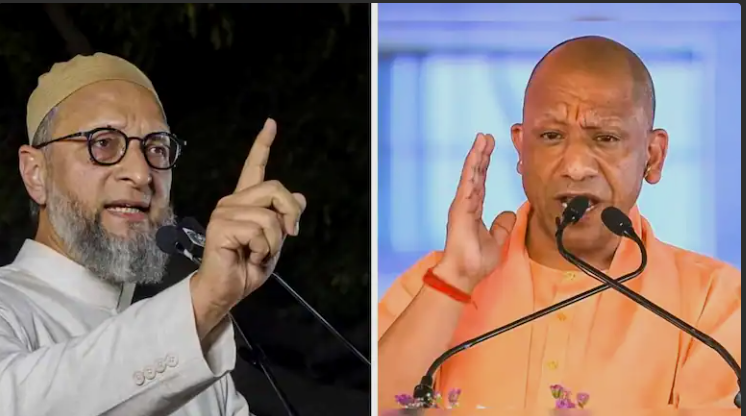
The alleged misappropriation of donations linked to the Ram Temple has evolved from a financial controversy into a major political issue, with leaders from different parties demanding transparency and accountability. The latest comments from AIMIM chief and Member of Parliament Asaduddin Owaisi have added another dimension to the debate, shifting the focus toward the equal application of law and the pace of the ongoing investigation.
Speaking at a public gathering in western Uttar Pradesh, Owaisi questioned whether the authorities were responding to the case with the same urgency seen in other high-profile investigations. He argued that every allegation of financial wrongdoing should be examined without bias and that all accused individuals must be treated equally under the law, regardless of their social, political, or religious background.
His remarks have triggered fresh political reactions, with supporters describing his statement as a demand for equal justice, while critics have accused him of attempting to give a communal angle to a matter that is currently under investigation. The exchange of views has once again highlighted how sensitive cases involving religious institutions often become subjects of intense political debate.
The controversy emerged after allegations surfaced regarding the handling of donations associated with the Ram Temple. The claims prompted calls for a detailed inquiry into the financial transactions and management of temple funds. Since then, opposition leaders have repeatedly sought greater transparency, arguing that contributions made by devotees should be managed with complete accountability and subjected to proper financial oversight.
Political observers believe the issue has now expanded beyond the original allegations. Instead of focusing solely on the financial aspects, discussions are increasingly revolving around governance, institutional transparency, and public confidence in investigative agencies. The case has also revived conversations about whether high-profile investigations are conducted uniformly across different sections of society.
Legal experts note that allegations alone should not be treated as proof of guilt. They emphasize that investigations must follow due process, relying on documentary evidence, witness statements, and financial records before any legal conclusions are reached. They also stress that fairness in the justice system depends on both impartial investigations and the protection of the legal rights of every individual involved.
Meanwhile, government agencies have maintained that the matter is being handled according to established legal procedures. Officials have stated that relevant records are being examined and that any further action will depend on the findings of the investigation. Authorities have not announced any final conclusions, indicating that the inquiry remains ongoing.
The political significance of the controversy is expected to grow in the coming weeks, particularly as different parties continue to use the issue to reinforce their broader narratives on governance and accountability. Analysts believe such debates often influence public opinion, especially when they involve institutions that hold deep cultural and religious importance.
Beyond the political exchanges, the case has also underlined the importance of strong financial governance within charitable and religious organizations. Experts say transparent accounting systems, regular independent audits, and public disclosure of financial practices can strengthen public trust and reduce the scope for future disputes.
As the investigation progresses, attention remains focused on whether it will provide clear answers to the allegations and restore public confidence. Regardless of political differences, there is broad agreement that any case involving public donations deserves a transparent, impartial, and evidence-based inquiry. Such an approach not only strengthens the rule of law but also reassures citizens that accountability applies equally to everyone.