

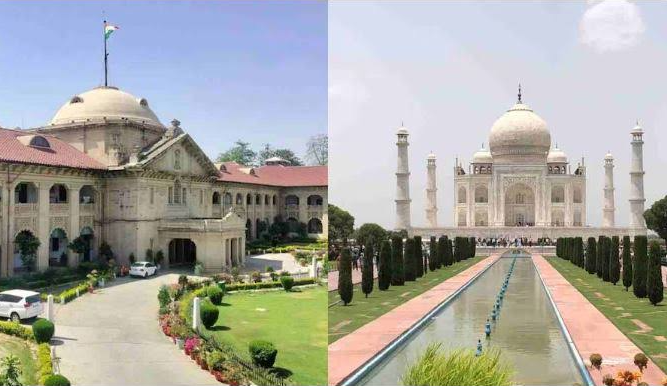
A long-running legal dispute surrounding the Taj Mahal has once again come into focus after a fresh petition was filed before the Allahabad High Court seeking the appointment of an Advocate Commissioner to conduct a survey of the monument. The petition is linked to claims that the Taj Mahal complex was originally a temple dedicated to Lord Agreshwar Mahadev, commonly referred to by the petitioners as “Tejo Mahalaya.”
The matter is expected to come up for hearing on Monday, although the High Court has not yet expressed any opinion on the merits of the claim.
Petition Challenges Earlier Court Orders
According to the petitioner, a civil suit filed in Agra in 2015 is still pending before the trial court. The suit seeks a judicial declaration that the present-day Taj Mahal complex was originally a Hindu temple.
During the proceedings, the petitioner requested the appointment of an Advocate Commissioner to inspect and survey the disputed premises. However, both the Civil Judge (Senior Division) and the Additional District Judge declined to allow the request.
The latest petition before the High Court challenges these earlier decisions and argues that an independent survey is necessary to assist the court in examining the issues raised in the civil suit.
Focus on Survey, Not Final Ownership
Legal experts point out that the present petition is limited to seeking a court-supervised survey. It does not amount to a judicial finding regarding the historical origin of the Taj Mahal.
If the High Court decides to entertain the plea, it will first determine whether appointing an Advocate Commissioner is legally justified. Any survey, if approved, would form only one part of the broader judicial process and would not automatically establish the validity of either side’s claims.
Monument Remains Protected Heritage Site
The Taj Mahal is one of India’s most recognized historical monuments and enjoys the status of a UNESCO World Heritage Site. It is protected under existing heritage conservation laws, and any examination or inspection of the premises would require appropriate legal authorization.
Government agencies responsible for archaeological conservation continue to maintain the monument under existing regulations. At present, there has been no official change in its legal or protected status.
Historical Debate Continues
The monument has periodically been at the center of public debate due to competing historical narratives. While mainstream historical research attributes the Taj Mahal’s construction to the Mughal emperor Shah Jahan during the 17th century, some individuals and organizations have advanced alternative claims regarding its origins.
These differing viewpoints have been discussed in public forums and court proceedings over the years. However, no court has issued a final judgment accepting the claim that the Taj Mahal was originally the “Tejo Mahalaya” temple.
High Court’s Decision Could Shape the Next Phase
The upcoming hearing is expected to focus primarily on procedural and legal questions rather than historical conclusions. The High Court will examine whether the lower courts acted correctly in rejecting the request for a survey and whether additional investigation is necessary for the pending civil suit.
For now, the case remains under judicial consideration, and no conclusions should be drawn until the court hears all parties and passes appropriate orders. Whatever the outcome of the hearing, it is likely to determine the next legal course in one of India’s most closely watched heritage-related disputes.