

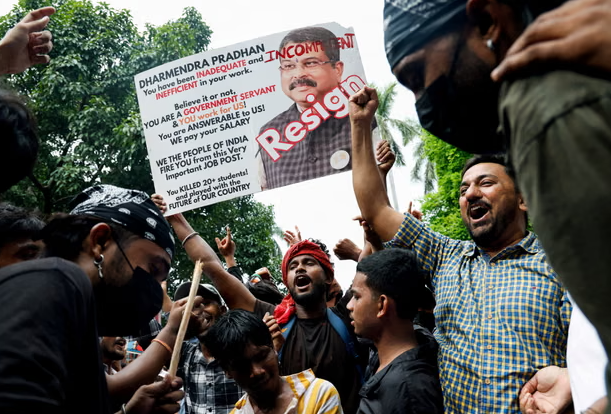
The nationwide protests over the alleged NEET examination paper leak have emerged as one of the most significant youth-led movements in recent years, triggering a broader debate on accountability, education reforms and the role of digital activism in India. The resignation of former Union Education Minister Dharmendra Pradhan has further intensified political discussions surrounding the issue.
What began as student demonstrations demanding fairness in the examination process gradually evolved into a nationwide campaign calling for greater transparency, institutional accountability and stronger safeguards for competitive examinations.
From Examination Concerns to a National Movement
The controversy started after allegations surrounding the NEET examination process led to widespread concern among students and parents. As demands for a transparent investigation grew, demonstrations spread across several states, with students gathering at public venues and educational institutions to express their concerns.
Protesters called for stronger measures to protect the integrity of national examinations and ensure that deserving candidates are not disadvantaged by irregularities.
Digital Platforms Amplified Student Voices
One of the defining features of the movement was its extensive use of social media. Students relied on platforms such as Instagram, X, YouTube and other digital channels to share information, organise demonstrations and communicate their demands.
Political observers say the movement demonstrated how online campaigns can rapidly influence public discourse, particularly among younger generations. Creative videos, graphics and digital campaigns helped the issue reach millions of people across the country.
Political Impact of the Protests
As demonstrations expanded, political pressure on the government increased. Calls for accountability became stronger, with several opposition parties supporting demands for reforms while the government maintained that it was committed to protecting the credibility of the examination system.
The resignation of Education Minister Dharmendra Pradhan marked a major political development in the midst of the controversy. In his resignation statement, he said his decision was guided by national interest and the need to ensure that the issue was not exploited in ways that could disturb public order.
Debate Over Education Reforms
The events have renewed discussions about improving India’s examination system. Education experts have stressed the importance of adopting advanced security technologies, strengthening monitoring mechanisms and ensuring greater transparency throughout the examination process.
Many believe that restoring public confidence will require both institutional reforms and strict action against those responsible for any malpractice.
Youth Participation in Democracy
Analysts say the protests also reflected the increasing role of young citizens in shaping public debate. Through peaceful demonstrations and digital engagement, students were able to bring education-related concerns into the national spotlight.
The movement highlighted how social media has become an important platform for civic participation, enabling young people to organise, share information and engage in discussions on public policy.
Looking Ahead
While the political consequences of the protests continue to unfold, the broader focus has shifted towards strengthening examination systems, improving governance and ensuring transparency in public institutions.