


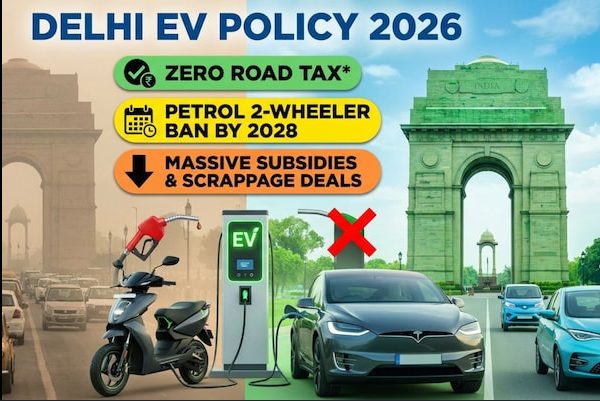
Delhi has taken another significant step toward sustainable transportation with the announcement of its new Electric Vehicle (EV) Policy, setting an ambitious roadmap to reduce dependence on fossil fuel-powered vehicles over the coming years. The policy is expected to reshape the capital’s transport ecosystem by encouraging electric mobility, expanding charging infrastructure, and supporting cleaner modes of travel.
The newly announced framework focuses on increasing the adoption of battery electric vehicles while gradually reducing the entry of new petrol and diesel-powered vehicles in specific categories. Officials believe the move will contribute to lowering vehicular emissions, improving air quality, and supporting India’s broader clean energy goals.
One of the key objectives of the policy is to make electric vehicles more accessible through financial incentives. Buyers of electric two-wheelers, three-wheelers, and light commercial vehicles will receive purchase subsidies during the initial years of the policy. These incentives are designed to reduce the upfront cost of EV ownership, making the transition more affordable for individual consumers as well as commercial operators.
Another major feature of the policy is its emphasis on charging infrastructure. The government plans to establish thousands of public charging stations across the city, ensuring that EV users can conveniently recharge their vehicles without worrying about limited charging options. The charging network is expected to cover residential neighbourhoods, commercial districts, public parking areas, transport hubs, and major roads.
Urban planning experts believe that a well-developed charging ecosystem is essential for increasing consumer confidence. While interest in electric vehicles has grown steadily in recent years, concerns about charging availability and driving range have remained barriers for many potential buyers. Expanding the charging network could significantly improve EV adoption across different sections of society.
The policy also places special attention on commercial transportation. Electric three-wheelers and light commercial vehicles play an important role in Delhi’s daily transport and logistics network. Encouraging businesses to replace conventional fuel-powered vehicles with electric alternatives could reduce emissions from one of the city’s busiest transport segments while lowering long-term operating costs for fleet owners.
Environmental experts have welcomed the initiative, noting that road transport remains one of the largest contributors to air pollution in metropolitan cities. Replacing internal combustion engine vehicles with zero-emission electric vehicles can help reduce particulate matter, greenhouse gas emissions, and urban noise pollution. Although the environmental benefits will become visible gradually, consistent policy support could produce meaningful long-term improvements.
Industry representatives have also responded positively to the policy. Automobile manufacturers and EV technology companies believe that a stable regulatory framework encourages investment in manufacturing, battery technology, charging solutions, and research. Such investments could strengthen India’s growing electric mobility sector while creating employment opportunities across manufacturing, infrastructure development, and maintenance services.
However, experts caution that successful implementation will require more than financial incentives. Reliable electricity supply, skilled maintenance networks, battery recycling systems, and consumer awareness campaigns will all be necessary to support large-scale EV adoption. They also emphasize the need for continued collaboration between government agencies, private companies, and utility providers.
As Delhi moves forward with its long-term electrification strategy, the new policy reflects a broader shift toward environmentally responsible urban transport. If implemented effectively, it could not only improve air quality in the national capital but also serve as a practical model for other Indian cities planning similar transitions. The coming years will determine how successfully the policy translates ambitious goals into measurable improvements in sustainable mobility and cleaner urban living.