


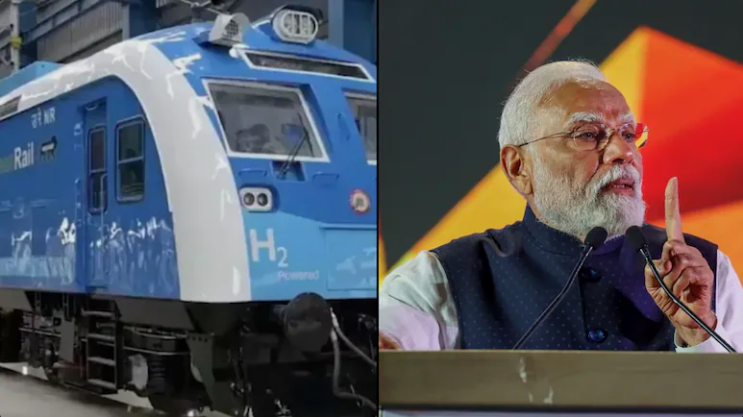
India is set to take a significant step towards sustainable transportation as Prime Minister Narendra Modi is scheduled to flag off the country’s first hydrogen-powered train from Jind in Haryana on July 17. The train will operate on the Jind–Sonipat route as part of a pilot project aimed at introducing cleaner energy solutions in the railway sector.
The launch represents an important milestone for Indian Railways, which has been working to adopt environmentally friendly technologies and reduce carbon emissions. Hydrogen-powered trains are considered one of the promising alternatives to conventional diesel-powered locomotives, supporting India’s long-term clean energy and climate goals.
Pilot Project on the Jind–Sonipat Route
The Jind–Sonipat rail section has been selected for the pilot operation of the hydrogen-powered train. To support the project, a dedicated hydrogen storage and refuelling facility has been established in Jind. The facility has received the necessary approvals from the relevant authorities for the safe storage and dispensing of compressed hydrogen.
Railway officials have also developed supporting infrastructure, including hydrogen compression systems and backup equipment, to ensure reliable refuelling and uninterrupted train operations.
How Hydrogen Trains Work
Unlike diesel locomotives, hydrogen-powered trains use fuel cell technology to generate electricity. In this process, hydrogen reacts with oxygen inside a fuel cell, producing electrical energy that powers the train. The only by-product of this reaction is water vapour, making the technology a cleaner alternative for rail transportation.
Experts believe hydrogen fuel cell systems could play an important role in reducing greenhouse gas emissions, especially on railway routes where electrification may not be practical.
Strong Focus on Safety
Indian Railways has introduced several safety measures for the project. Hydrogen leak detectors, flame detection systems, and continuous monitoring equipment have been installed at the production, storage, and refuelling facility. Regular inspections and maintenance schedules have also been planned to ensure safe operations.
During the initial phase, trained technical personnel will accompany the train, while maintenance facilities will follow standard operating procedures and undergo routine safety audits.
A Step Towards Sustainable Mobility
With the launch of this project, India joins a small group of countries exploring hydrogen-powered rail technology as part of their transition to greener transportation. Although the technology is still evolving globally, it is increasingly viewed as a viable solution for reducing dependence on fossil fuels.
The hydrogen train initiative aligns with India’s broader vision of promoting clean energy, improving energy efficiency, and supporting its long-term commitment to achieving lower carbon emissions. If the pilot project performs successfully, similar hydrogen-powered trains could be introduced on additional routes in the future.