

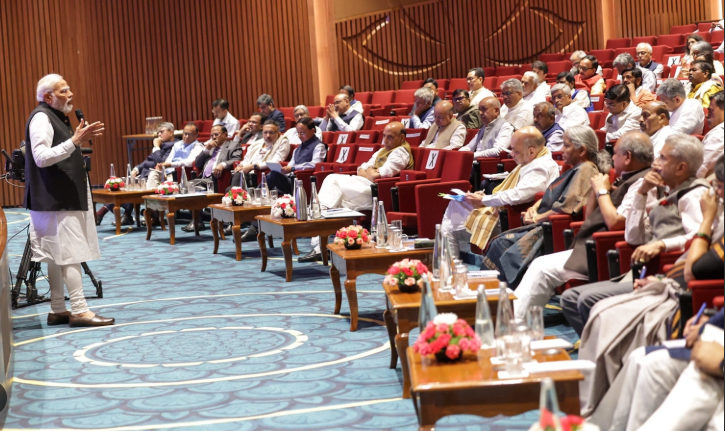
Prime Minister Narendra Modi is set to chair an important meeting of the Council of Ministers in the national capital, where the government is expected to review the performance of various ministries and discuss priorities for the coming months. The high-level meeting is being viewed as significant both politically and administratively, especially at a time when India is dealing with global economic uncertainty and domestic development challenges.
Senior cabinet ministers, ministers of state with independent charge and other ministers are expected to participate in the meeting. According to sources, discussions may focus on governance reforms, implementation of welfare schemes, infrastructure expansion and strategies to maintain economic stability amid changing global conditions.
Officials familiar with the preparations said ministries have been asked to submit reports on key reforms, achievements and successful initiatives implemented over recent years. The government is reportedly keen to evaluate which schemes have delivered the strongest impact at the grassroots level and where further improvements may be required.
The meeting comes at a time when global geopolitical tensions and rising crude oil prices are affecting economies around the world. The ongoing instability in West Asia has raised concerns over energy security, fuel prices and supply chain disruptions. Experts believe the government may discuss measures to minimise the impact of these developments on Indian consumers and businesses.
Economic analysts say rising fuel costs can influence inflation, transportation expenses and the prices of essential goods. In this context, ministries related to energy, transport, agriculture, fertilisers, aviation and logistics are expected to coordinate closely on future policy decisions.
The government is also likely to focus on maintaining growth momentum through infrastructure development and investment promotion. India has significantly increased spending on highways, railways, ports, airports and digital connectivity projects in recent years. The progress of these projects may be reviewed during the meeting.
According to political observers, the session is important because it takes place after major electoral developments in several states. The ruling Bharatiya Janata Party’s recent political successes have strengthened the government’s position, and analysts believe the leadership may now focus on accelerating governance and public outreach efforts.
Prime Minister Modi has repeatedly emphasised administrative efficiency, transparency and faster delivery of public services. As a result, ministers may be asked to ensure quicker implementation of schemes and stronger coordination between departments.
Digital governance and technology-driven reforms are also expected to remain central to discussions. Over the past decade, the government has expanded online public services, direct benefit transfers and digital identity systems aimed at improving transparency and reducing delays in welfare distribution.
Experts say the government is likely to continue prioritising reforms that directly affect common citizens, including healthcare, rural development, housing, employment and social welfare programmes. Ministries may also be encouraged to strengthen monitoring systems to ensure that schemes reach intended beneficiaries more effectively.
The meeting could additionally address India’s long-term economic strategy. Policymakers are expected to discuss ways to strengthen manufacturing, attract investment, improve exports and enhance India’s position in global supply chains.
Political analysts believe such meetings are not only administrative exercises but also opportunities for the leadership to communicate broader strategic goals to ministers. The government may use the session to outline priorities for the next phase of governance and policy implementation.