

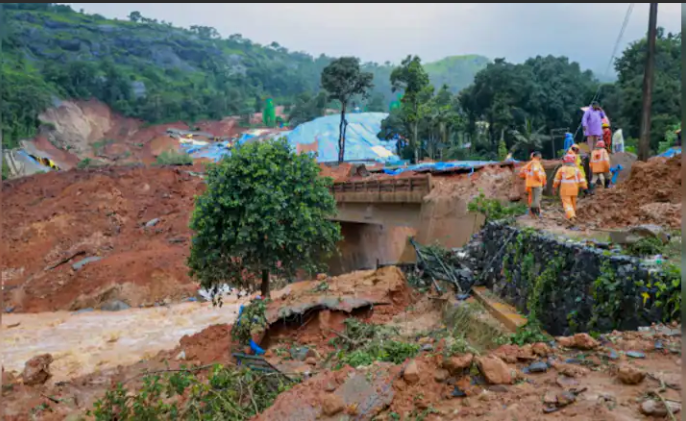
An internal technical assessment prepared before the deadly landslide at Kerala’s Wayanad tunnel project reportedly identified serious stability concerns at the construction site, raising questions about the conditions leading up to the accident that claimed six lives.
The report, prepared after a geological and geotechnical inspection of the tunnel’s North Portal, is said to have highlighted the possibility of a sudden slope collapse during continued rainfall. The landslide later occurred at the same location where the tunnel entrance was under construction.
Inspection Found Unstable Ground Conditions
According to the assessment, engineers examining the site observed that the hillside above the tunnel entrance consisted of a thick layer of loose silty soil resting on harder rock. Such soil has poor drainage characteristics and can become significantly weaker after prolonged rainfall as water accumulates within it.
The report noted that although stabilization measures such as stepped slope cutting, shotcrete application, and soil nailing had been carried out, several warning signs had already appeared during the inspection.
Cracks, Water Seepage and Internal Erosion Raised Concerns
The assessment reportedly documented widening cracks across the slope, movement of soil along the cut benches, water seepage, and the formation of underground cavities. Investigators also observed indications of water flowing beneath the surface, suggesting that internal erosion was gradually weakening the hillside.
Experts noted that underground water channels can reduce the strength of soil from within, increasing the likelihood of a sudden landslide even if the surface appears relatively stable.
Left Side of the Slope Identified as Higher Risk
The report is said to have distinguished between different sections of the construction area, identifying the left side of the North Portal as significantly more vulnerable than the opposite side.
Based on the prevailing weather conditions, the assessment reportedly warned that the affected slope could experience sudden failure if heavy rainfall continued.
Safety Questions After the Incident
Following the fatal landslide, attention has turned to whether additional safety measures or precautionary steps could have reduced the risk at the construction site. The incident has prompted calls for a detailed review of engineering practices, slope monitoring systems, and emergency preparedness at large infrastructure projects located in landslide-prone regions.
Investigation Underway
Authorities are continuing their investigation to determine the exact sequence of events that led to the collapse. Officials are expected to examine geological conditions, construction methods, weather patterns, and compliance with safety protocols before reaching any conclusions.
As the inquiry progresses, the findings are likely to play an important role in shaping future safety standards for tunnel construction projects in challenging terrain.